Key Takeaways
- Hajj is performed from 8th to 12th (or 13th) Dhul Hijjah.
- Standing at Arafat on the 9th is the most important pillar – “Hajj is Arafah”.
- Most pilgrims from India perform Hajj al-Tamattu‘ (Umrah first, then Hajj).
- Hajj 2027 is expected around mid-May 2027, subject to moon sighting.
In this article
Hajj is the fifth pillar of Islam – obligatory once in a lifetime for every adult Muslim who is physically and financially able. Unlike Umrah, it is performed only on specific days of the Islamic month of Dhul Hijjah. This guide walks you through the five days of Hajj, what to do on each day and how to prepare.
Three Types of Hajj
| Type | What it means | Sacrifice (Qurbani) |
|---|---|---|
| Tamattu‘ | Perform Umrah in the Hajj months, exit Ihram, then enter Ihram again for Hajj on 8th Dhul Hijjah. Most common for pilgrims from India. | Required |
| Qiran | Umrah and Hajj combined in one Ihram without exiting between them. | Required |
| Ifrad | Hajj only, without Umrah. | Not required |
Before Hajj: Arrival and Umrah
Pilgrims performing Tamattu‘ arrive in Makkah (or Madinah first) in the days or weeks before Hajj. On arrival in Makkah they perform Umrah – see our step-by-step Umrah guide – and then exit Ihram and wait for the Hajj days, spending time in worship at the Haram.
Day 1 – 8th Dhul Hijjah (Yawm at-Tarwiyah): Go to Mina
- Take a bath, wear Ihram from your hotel in Makkah and make the intention for Hajj: “Labbayk Allahumma Hajjan”.
- Begin reciting the Talbiyah.
- Travel to Mina (about 8 km from the Haram) and stay in the tent city.
- Pray Dhuhr, Asr, Maghrib, Isha and the next morning’s Fajr in Mina – shortening four-rak‘ah prayers to two.
لَبَّيْكَ اللَّهُمَّ لَبَّيْكَ، لَبَّيْكَ لَا شَرِيكَ لَكَ لَبَّيْكَ، إِنَّ الْحَمْدَ وَالنِّعْمَةَ لَكَ وَالْمُلْكَ، لَا شَرِيكَ لَكَ
Labbayk Allahumma labbayk, labbayka la shareeka laka labbayk, innal-hamda wan-ni‘mata laka wal-mulk, la shareeka lak.
Here I am, O Allah, here I am. Here I am, You have no partner, here I am. Surely all praise, blessings and dominion belong to You. You have no partner. (Sahih al-Bukhari, Sahih Muslim)
Day 2 – 9th Dhul Hijjah: The Day of Arafah
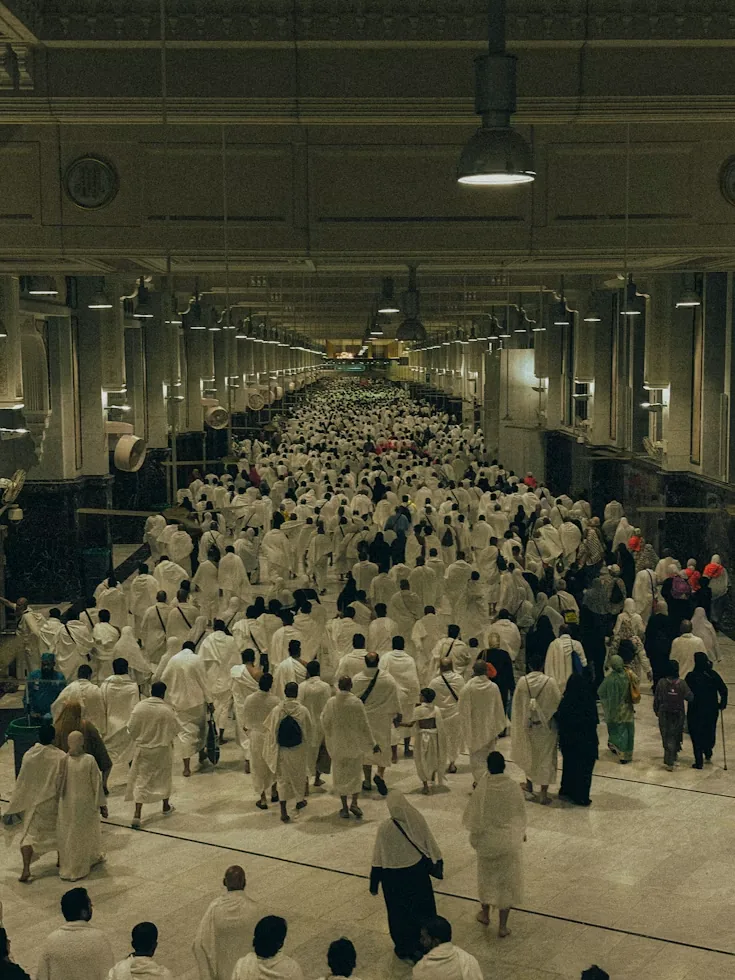
This is the heart of Hajj. The Prophet ﷺ said, “Hajj is Arafah.” (Tirmidhi). Missing Arafat means missing Hajj.
Travel to Arafat after sunrise
Groups move by bus or the Mashair train from Mina to the plain of Arafat.
Wuquf (standing) from midday to sunset
Pray Dhuhr and Asr combined and shortened. Then spend the afternoon in dua, dhikr, istighfar and Qur’an – standing, sitting or facing the Qiblah. You do not need to climb Jabal al-Rahmah.
Leave for Muzdalifah after sunset
Do not pray Maghrib at Arafat – it is prayed at Muzdalifah together with Isha.
لَا إِلَهَ إِلَّا اللَّهُ وَحْدَهُ لَا شَرِيكَ لَهُ، لَهُ الْمُلْكُ وَلَهُ الْحَمْدُ، وَهُوَ عَلَى كُلِّ شَيْءٍ قَدِيرٌ
La ilaha illallahu wahdahu la shareeka lah, lahul-mulku wa lahul-hamd, wa huwa ‘ala kulli shay’in qadeer.
None has the right to be worshipped except Allah alone, without partner. His is the dominion and His is the praise, and He has power over all things. The Prophet ﷺ called this the best dua on the Day of Arafah. (Tirmidhi)
Night of the 9th: Muzdalifah
- Pray Maghrib and Isha together on arrival.
- Collect pebbles for the Rami – 7 for the 10th, and 21 for each following day (49 or 70 in total). Many pilgrims collect a few extra.
- Spend the night under the open sky. Elderly, weak pilgrims and women may leave after midnight, as permitted.
- After Fajr, make dua facing the Qiblah until shortly before sunrise, then leave for Mina.
Day 3 – 10th Dhul Hijjah (Yawm an-Nahr / Eid al-Adha)
The busiest day of Hajj, with four acts. The Sunnah order is below, though scholars allow flexibility if the order changes:
Rami of Jamarat al-Aqabah
Throw 7 pebbles at the large Jamarah only, saying “Allahu Akbar” with each. Stop reciting the Talbiyah.
Qurbani (animal sacrifice)
Required for Tamattu‘ and Qiran pilgrims. Most groups book this through official sacrifice vouchers and inform you when it is done.
Halq or Taqsir
Men shave or trim; women cut a fingertip’s length. Most Ihram restrictions are now lifted except marital relations.
Tawaf al-Ifadah and Sa‘i
Go to Makkah to perform Tawaf al-Ifadah (a pillar of Hajj) and Sa‘i. This can also be done on the 11th or 12th. After it, all restrictions are lifted.
Days 4 & 5 – 11th and 12th Dhul Hijjah (Days of Tashreeq)
- Stay the nights in Mina.
- Each day, after midday, stone all three Jamarat in order – small (Ula), middle (Wusta), then large (Aqabah) – 7 pebbles each.
- Make dua after stoning the first and second Jamarat.
- You may leave Mina on the 12th before sunset. Those who stay also stone on the 13th.
Follow the stoning times your group leader gives you – they are planned to avoid peak crowds. Never carry large bags or stop to pick up dropped items on the Jamarat bridge.
Tawaf al-Wada: The Farewell Tawaf
Before leaving Makkah, perform the farewell Tawaf (seven rounds, no Sa‘i). Women in menstruation are excused from it. Many pilgrims then travel to Madinah, if they have not already visited.
Hajj 2027: Expected Dates
| Event | Islamic date | Expected date* |
|---|---|---|
| Start of Dhul Hijjah | 1 Dhul Hijjah 1448 | Around 7 May 2027 |
| Day of Tarwiyah (Mina) | 8 Dhul Hijjah | Around 14 May 2027 |
| Day of Arafah | 9 Dhul Hijjah | Around 15 May 2027 |
| Eid al-Adha | 10 Dhul Hijjah | Around 16 May 2027 |
*Estimated dates. Actual dates depend on the sighting of the moon in Saudi Arabia.
Planning Hajj 2027?
Talk to our team about Hajj Committee guidance and private Hajj packages with experienced group leaders.

Travel Point Team
Hajj & Umrah Specialists since 2014 · Gorakhpur, Uttar PradeshOur team has guided thousands of pilgrims from Gorakhpur and across India on Hajj and Umrah. These guides are written from first-hand experience to help you prepare with confidence. For religious rulings, please also consult a trusted scholar.